Buy Liquid Xanax Buy Valium Tablets Online Buy Aura Soma Uk Buy Xanax Pills Online Cheap Generic Xanax Online Buy Generic Valium Online

BLOG

The Ultimate Family Food Fight!

October 4, 2011


Hello!

I’m Kamini Rao, from Bangalore, your go to person on all food matters.. well South Indian food. I want to study the art of changing experiences through the design of space. As naive as it sounds, when I grow up, I want to be the Indian Thomas Heatherwick.

The Post It.

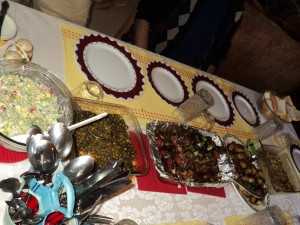
Like most families, mine (the Rao’s) eat one compulsory meal together at dinner. Depending on the meal we split our week between the formal dinning table or lounging around the TV, subconsciously categorizing each meal within a vicious hierarchy where unfortunately Indian food from our region (Karnataka) becomes the mundane ‘everyday’ meal. At the top of the hierarchy we have the relatively exotic Thai meal and it’s close second, Pasta! Our table top is chaotic and for most Indians it’s a bit confusing. Each dish describes a different aspect of my life:

Brahmin Vegetarian – Plated on regular cutlery instead of a banana leaf, consisting mainly of rice and curry’s with an assortment of vegetables (too many vegetables), Catholic Manglorean – Meat, meat and fish! and globalized youth – (unfortunately) Dominoes or Mcdonalds.

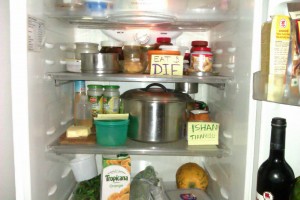
Food, the single source of life has provided our family with plethora of happy memories but above all it has created a vast amount of anxiety. Ever heard of the phrase ‘Sharing is caring’? That concept does not exist in my family. There is a constant tug of war for the last creme brule, the ultimate family food fight. This inside of our fridge almost looks diseased with Post It’s scattered across Tupperware boxes, warding off strangers. And if one of those boxes were to go missing.. the reign of forks and knives begins.

THREE?!

How is it possible to have only three favorites? The torture of elimination!

{source}

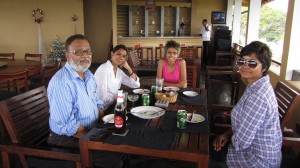
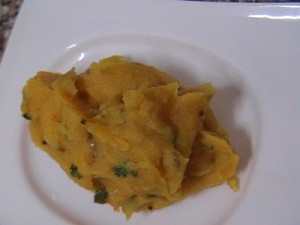
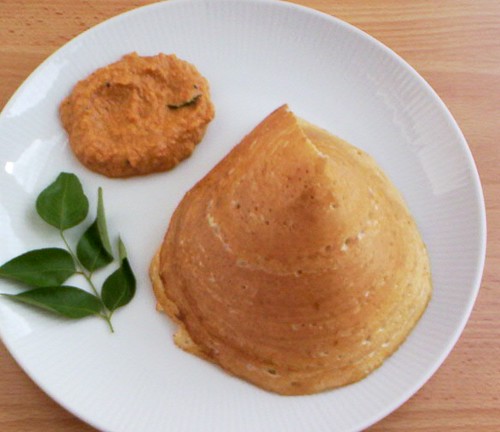
Dosa’s come in all shapes and sizes and the light, crispy kind is my favorite. It’s mainly a South Indian breakfast dish but has evolved into a popular street food that can be ordered any time of the day.

{source}

Sorpotel is a delicious dish made in the southern coastal regions of India, mainly Goa and Mangalore. Originally a Portuguese dish, it’s been adapted with Indian spices and made with pork (which is not a common meat). Rumor has it, not long ago, the dish was flavored with pig’s blood which terrified me, so it’s only a recent favorite of mine.

{source}

There are no words to describe Uncle Chipps. The explosion of flavor in your mouth is almost magical.


FoodLab Bangalore – is a 3 week workshop the Center for Genomic Gastronomy conducted with sophomores from the Srishti School of Art, Design & Technology in the fall of 2011. Students will examine innovation and conservation in South Asian food cultures, building on recent research of the Center (utopian cuisines, mutagenic meals) and working towards the next edition of the Planetary Sculpture Supper Club to be held in Bangalore on Nov. 12th.

Follow the conversation all week here on our Blog, join in the comments and use the twitter hashtag #foodlabbangalore to keep up to date.

Family Fondue

October 3, 2011

I’m a Bengali, which in no way defines who I am, but there are certain traits -whether cultural or genetic that have latched themselves onto me like sucker fish. Food is the solution to every problem whether it be health, psychological or emotional. Food is what gets people together or breaks ties depending on the quality of the menu. It provides the medium for soul searching and scintillating arguments.

Yes my friend, a loaded table is a happy household.

A gathering of kindred spirits makes for a hearty meal.
I have observed since long ago that a meal eaten in the right order, in the right place, in the right company can satiate the soul in a way that I can hardly believe nirvana can.

There is something about the heat from the platter, the textures under one’s fingers and the ruckus that comes with every family meal that will never find a substitute.

Honestly speaking, I’m no gourmet. I’m never the first to grab a menu, nor one for patiently sampling wine. I never consciously mull over the firework of flavours that flare up in my mouth during a good meal. No, I’m the one who sits to a corner of the banquet greedily savouring each and every magical moment that the bites reveals. The sounds, the fragrance, the sudden secret chuckles or the passing gestures.

The expression on my brother’s face one warm evening in my grandma’s house in Paris when the mysteries of a mince pie were first revealed to us. He’d bitten into a little smiling train that he thought was a candy, now over ten years later, he still has it a tiny memory of a meal. There was the time a dear old lady made a six year old me comfortable in her woodsy house on the out skirts of St. Petersburg and watched smiling as I demolished an entire plate of steaming pelminis with single minded determination. My mother and my father dancing to Dean Martin on a Sunday evening as the thick meat sauces bubbled over in the kitchen and the spectacular burst of colour scattered over the counter top promised a delicious end to the day.

Dean Martin- That\’s Amore 🙂

I listen during meals, I learn. Our family dinners have taught me more about these people who raised me than chance conversations. There is something revealing in the way a person behaves when they’re submerged in an avalanche of flavours. They find themselves willing to let their guards down, their persona on the side board and join in the numerous arguments that are a traditional side dish with every meal.

The cuisine is varied. During the week we have a fairly regular menu that’s a precarious combination of convenience and nutrition. Under my mother’s critical eye the Vitamins march themselves up to an array of pots and pans and our Muslim cook churns out a series of highly delicious, usually vegetarian dishes. But I don’t pay too much attention to these.

It’s my evening ritual of either milk or tea that I look forward to on week days. I make this myself being ridiculously peculiar about the proportion of coffee to cocoa to cinnamon in my mug (which has to be the right colour with the right kind of handle).

The orgies begin on the weekends when my family finds itself together, bungling into one another as we try to navigate through our tiny kitchen. We make what suits our mood and our pockets- Lord are the prices rising!- and we improvise. My brother has a way with garlic, my mother with mushrooms and peas. My father with meat and fish. It’s rather entertaining actually.


As for myself, I’m the kid who can gently mold chocolates and bake. When I bake I feel like an alchemist or a witch. The funny thing is, once I’m done I like sitting back and watching again. Watching expressions chase across their faces as they sink their teeth into my creations. Sometimes I barely have more than a bite of what I’ve made. I get more pleasure from watching and listening.

That’s what I look for in a banquet- knowledge.

The Trinity- Or food i can’t live without.

I’m a milk addict.

And India is the world’s largest milk producer 🙂

There you have it. But there aren’t two ways about it- I’m hooked. If I don’t have my two mugs a day, I start feeling drowsy and glum or irritable. Yes you have it: I, an average nineteen year old girl, go into withdrawal if I don’t drink.

It’s not always the inherent flavour of the substance- heck that’s sometimes rather nasty with the adulterated crap one gets now a days- but it might be the consistency. I can’t really put my finger on it. Milk and honey; milk-and-coffee; milk-and-cinnamon; milk-and-turmeric. It’s endless!

The scary thing is, years from now I can actually imagine “popping” a bottle of milk to celebrate my wedding to a dairy farmer.

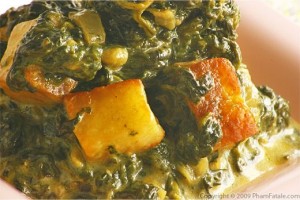
Paneer. Palak paneer to be precise.

Yup another milk based product but this one is submerged in spinach and my-oh-my is that good! Originally a Punjabi dish it spread like wild fire all over the country. It’s comfort food and the bane of my mother’s existence- I get her to make it at least twice a week. There is something about the flavour and of the thick, rich green gravy and the white delectable consistency of the paneer that makes me drool.

It absolutely hits the spot!

 A recipe for you 🙂


Naan.

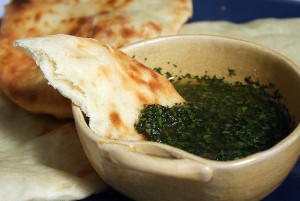
A Persian word meaning ‘bread’ this flat bread is popular in south and central Asia, it soon spread to Suadi Arabia and other Persian Gulf states. Well to be fair I’m and about all kinds of bread. Bread, bread, bread, bread. But I’m Indian after all, my taste buds are guilty of a little partiality. I could chew on these all day long. Plain or dipped in something. There was this one time that I came across Peshawri naan coated with nuts. Wow! I’m not the kind who has mind blowing moments very often but that day I nearly kissed the chef!

Give us this day our daily bread 🙂

– Meghna Saha


FoodLab Bangalore – is a 3 week workshop the Center for Genomic Gastronomy conducted with sophomores from the Srishti School of Art, Design & Technology in the fall of 2011. Students will examine innovation and conservation in South Asian food cultures, building on recent research of the Center (utopian cuisines, mutagenic meals) and working towards the next edition of the Planetary Sculpture Supper Club to be held in Bangalore on Nov. 12th.

Follow the conversation all week here on our Blog, join in the comments and use the twitter hashtag #foodlabbangalore to keep up to date.
Cheese as an Appropriate Biotechnology?

July 11, 2011


One of the Center’s mandates is to study the biotechnologies that make up human food systems. Cheese is one of the earliest, non-obvious and most widespread biotechnologies in use on the planet.

For the Planetary Sculpture Supper Club held in Portland, OR we served three regionally produced cheeses (based on our research from Cheese Wrestling.)

Each regional cheese had different combinations of [raw/pasteurized, rennet type, milk type].

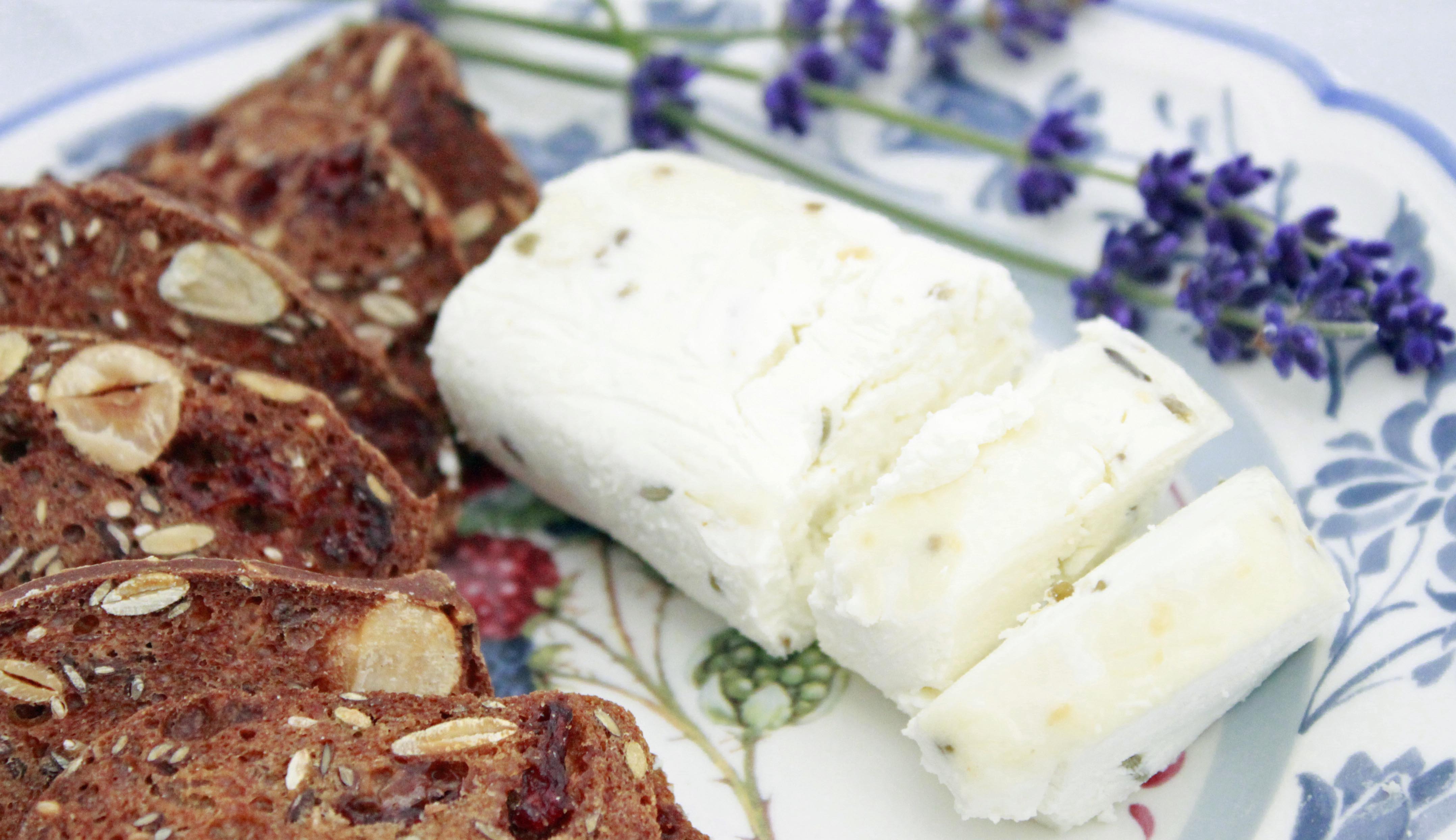
Chevre Anise Lavender, Rollingstone (ID)
[pasteurized, vegetable rennet, goat milk]

Smokey Blue, Rogue Creamery (OR)
[raw, vegetable enzymes, sheep milk]

Seastack, Mt. Townsend Creamery (WA)
[pasteurized, animal rennet, cow milk]


One question we asked at the dinner was: In comparison to ubiquitous industrial cheeses in the United States (ex. Velveeta cheese) can these regional cheeses be classified as Appropriate (Bio)Technologies? Appropriate technologies have some or all of the following characteristics:

  • small scale
  • labor intensive
  • energy efficient
  • environmentally sound
  • locally controlled
  • people-centered

We asked our diners what they thought the advantages and disadvantages of privileging the above characteristics in a technology were. Some of the diners helped us define (as well as challenge the idea) that there are “inappropriate” technologies. Some diners were shocked that Genetically Engineered rennet is used in the industrial production of cheese in the U.S.

A few diners were keen on the idea that cheesemakers should be recognized and aknowledged as some of the worlds oldest biotechnologists. It was agreed that with such a long history and diverse body of knowledge, cheese makers should explicitly be included and invited to conversations about biotechnology, ethics and sustainability. If biotechnology for food system resilience is the question, regional cheese production may be part of the answer. (And it certainly tastes better than Velveeta. And taste matters.)

Explicitly naming cheese production a “biotechnology” and comparing it to the range of other biotechnologies and controversies surrounding food is one way the Center has tried to open up a space for eaters to taste and talk about difficult topics. Controversies in cheese making include: ongoing debates about pasteurized vs. raw milk cheeses, and the role of rennet.

GMO-Microbial rennet is used more often in industrial cheese-making because it is less expensive than animal rennet. Traditional cheeses from Europe must legally be made using rennet from animal stomachs. There are also cheese innovators that use vegetable-based rennet substitutes to create entirely new cheeses.  Once you create a cheese plate with each of these kinds of cheeses, and explain the rationale for each kind of rennet, it is clear that the matter is much more complex than simply tradition vs. innovation.

Even the legal regimes for how cheeses are named are periodically contested. In 2002, the U.S. FDA issued a warning letter to Kraft that Velveeta was being sold with packaging that inaccurately described it as a “Pasteurized Process Cheese Spread.” Instead of complying with the label’s requirements, Kraft rechristened Velveeta “Pasteurized Prepared Cheese Product,” a term for which the FDA does not maintain a standard of identity.

The legal regime for cheese in the U.S. seems to do two things well: protecting the trademarks rights and proprietary processes of large industrial producers, and creating designations such as Pasteurized process cheese food that seek to protect consumers by explicitly stating the components and nutritional value of cheese, based on nutrition science and chemistry.

In the EU, the Protected Geographical Status tends to protect the rights of geographic and cultural traditions. If a cheesemaker wants to use the trademark name of a geographical indicators, they need to explicitly follow rules and processes that are available publicly here. So although some kinds of innovation are discouraged (most PDO protected cheeses require the use of animal rennet instead of vegetable rennet) the processes are public, and the naming conventions are based on the traditions of a geography and culture.

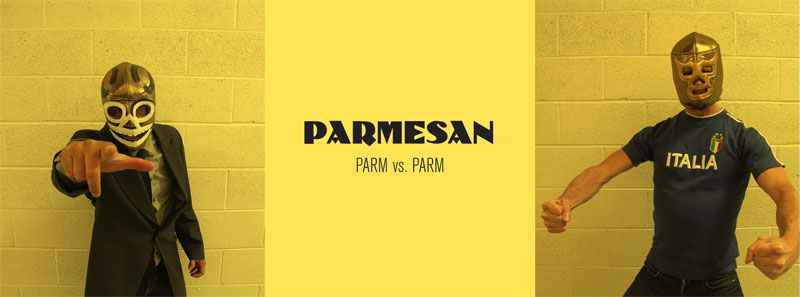
Also, because the U.S. does not follow this EU convention, it can sell commercially produced imitator cheeses such as “Parmesan” cheese instead of Parmigiano-Reggiano cheese.  However, when American imitator cheeses are sold in Europe they need to have different names so Kraft’s “Parmesan Cheese” becomes “Pamesello Italiano”.

Kraft Parm vs. King Parm from Cheese Wrestling

In short:

In the US Kraft is protected via tm and cbi.
In the EU Parmigiano-Reggiano is protected via pgs/pdo.

And what of artisanal or small scale cheeses in the US?
What portions of the law are favorable or not to their processes and business?

Like any biotechnology: cheese is as much about the cultural and legal as about the scientific and technological.

Image Sources:
Rollingstone Lavender Chevre
Mt. Townsend Seastack
Rogue Smokey Blue

Fish Tomato (Missing)

July 8, 2011

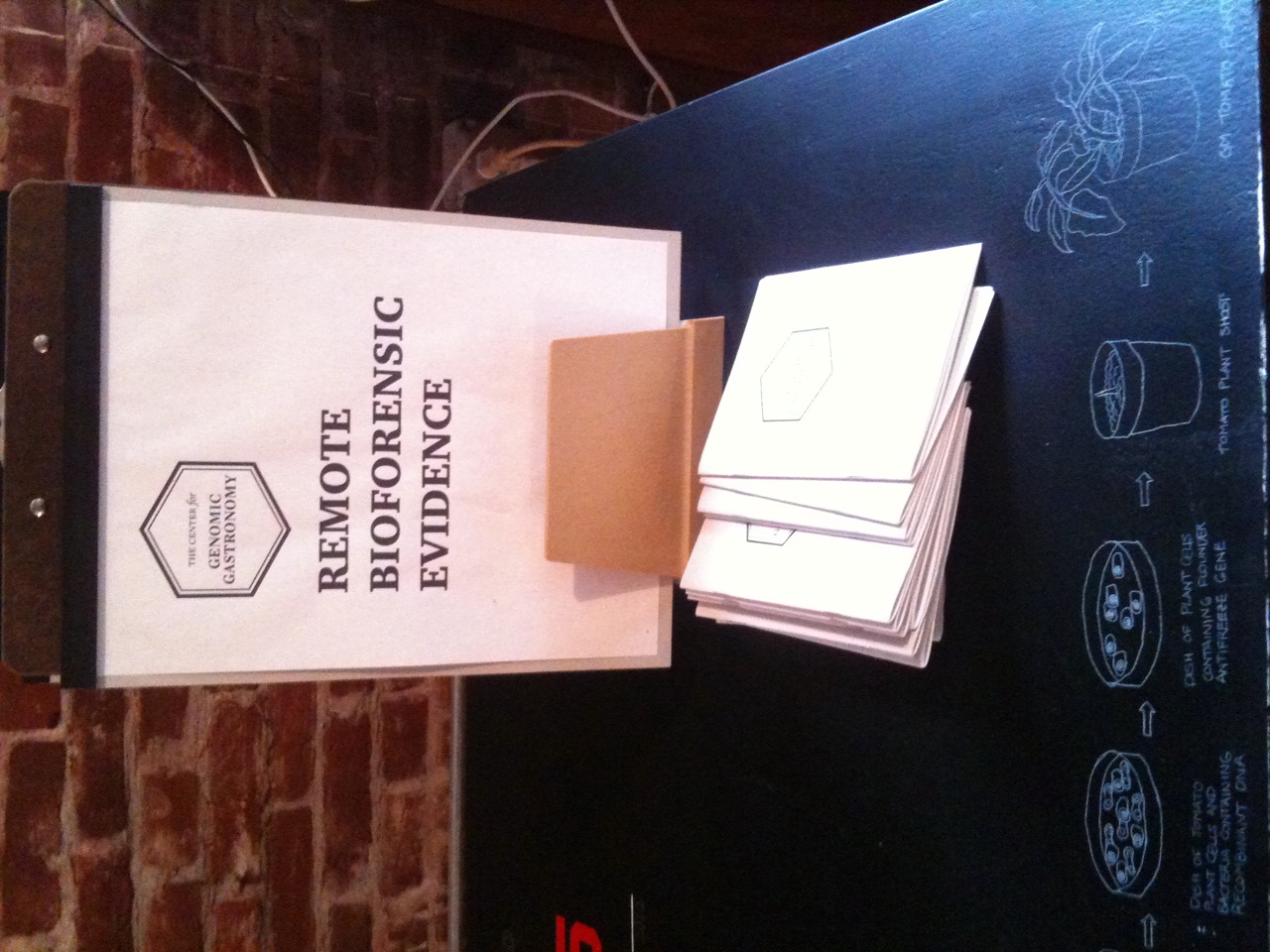
The Center recently held it’s first Planetary Sculpture Supper Club. We wanted to commemorate our fruitless but ongoing search for the Fish Tomato.


Heather was head chef for the evening and wrote:

Genomic Gastronomy wanted to draw attention to the “search for the fish tomato,” a tomato genetically engineered with fish genes in an effort to resist frost. This idea made them think, fish + tomato=bouillabaisse, and they thought it would be a fun/interesting challenge to make a vegetarian bouillabaisse to underscore the tomato theme. It was a challenge to give it depth and flavor without any fish or seafood and that’s why I worked really hard on the finishing ingredients.

So the broth is all traditional bouillabaisse foundation: tomato, saffron, white wine, onion, celery, carrot, fennel, leeks. instead of the traditional sauce rouille that accompanies bouillabaisse, I wanted to do something lighter and also linked thematically to the rest of the menu. So I made a lemony aioli (whisked by hand, using Wag eggs, which are hella expensive, but their yolks are amazing) and put that on a pa amb tom quet with smoky spanish paprika. I was making an overture to the later Old/World course of gorilla meats sausages and polenta that I made. So I was thinking about Spain, cultural collisions.

Spanish but a resistant subculture to the dominant Castilian power: Catalan. So pa amb tom quet is a traditional Catalan dish, so simple, of toasted bread, scraped with a clove of garlic, rubbed with a cut tomato half and then drizzled with olive oil. The pimenton again is a nod to Christopher Columbus and exploration, as it is reported that Christopher Columbus brought pimenton to Spain after his second voyage. The smoky paprika also gave some depth of flavor to the tomato dish.

Photo: Ryan Fish

Planetary Sculpture Supper Club

June 24, 2011

The Center for Genomic Gastronomy presents:
THE PLANETARY SCULPTURE SUPPER CLUB

hosted by:
RECESS

when:
Start 7pm, 28th June 2011

where:
RECESS, 1127 SE 10th Ave, Portland, OR 97214

cost:
$25

How have our foodways sculpted the planet? This culinary event offers eaters a chance to explore recipes and taste-test research about the genomes and biotechnologies that make up the human food systems of planet Earth.

In collaboration with Gorilla Meats Meat Club and Heather Julius from Special Snowflake Supperclub, the Center will serve a six-course meal, creating a delicious synthesis of Genomic Gastronomy research undertaken over the past year. Join us in following the journey of edible genomes that have traversed the globe in the last 400 years.

To attend, book your seat by emailing:
info@genomicgastronomy.com

Limited places available, and will be allocated on a first come, first serve basis.

Genomic Gastronomy at Church!

June 21, 2011

This Sunday the Center spent the day at Church! a semi-regular gathering of artists, crafters and entrepreneurs, in Portland, Ore., Or as the organizers write:

A ritualistic Sunday gathering to open dialogue in Portland’s creative community and expand on the narrow avenues that already exist for showing work. A gathering where nothing is sold, CHURCH! is a free space for sharing ideas and intermingling between artists working in a multitude of different medias.

Thanks to our good friends The Gorilla Meats Co. for helping organize the event and 220 salon for hosting everyone.

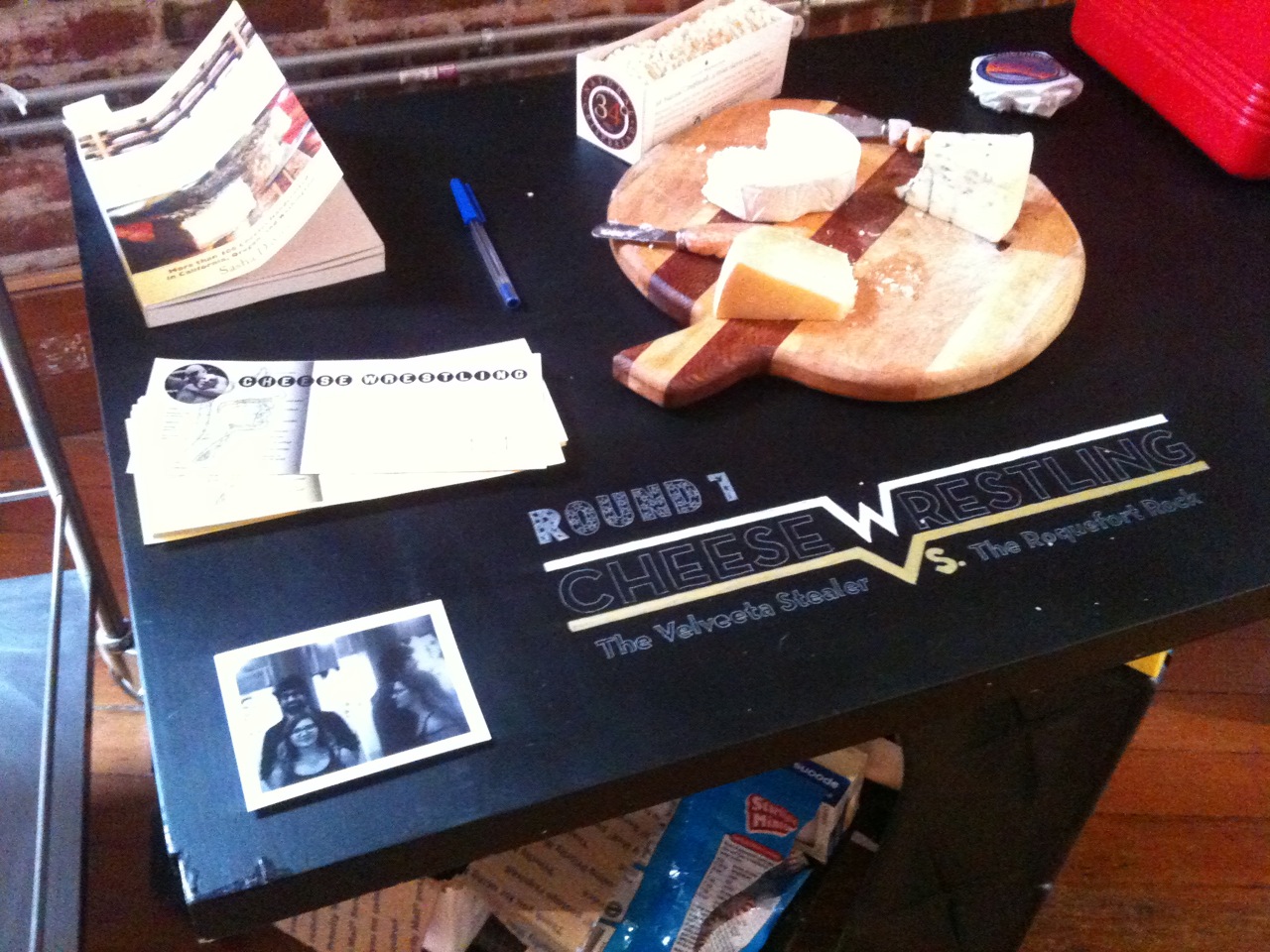
CHEESE WRESTLING

As part of the event we had a Qualifying round for this weeks Cheese Wrestling event. The competition was a local bracket and the three cheeses that we pitted against each other were from these Pacific Northwest creameries:

Willamette Valley Cheese Co.‘s Brindisi (aged Fontina)
Rogue Creamery‘s Oregon Blue Cheese
Mt. Townsend Creamery‘s Cirrus – PNW Camembert

If you would like to find out who won, and enjoy ten more rounds of tenacious cheeses battling for the attention of your taste buds come to Gallery Homeland this Friday at 6 PM in Portland, OR.

GORILLA MEATS CO.

And some images from The Gorilla Meats Co. who served their Cheeky Thai sausage.

Genomic Gastronomy hits the mainstream & Cat Urine Beer

June 16, 2011

From The Penfield Post:

OK, class, it’s time to get educated on hops, and your teacher is Jim Koch.

Koch, founder and brewer at Samuel Adams, has released a new 12-pack that will help educate everyone on the various flavors different hops can bring to a beer with the Latitude 48 Deconstructed 12-pack.

The 12-pack features the original Latitude 48, an India pale ale brewed with five hops. It also features five other versions of the Latitude 48, each one brewed with a single hop used in the original version. There are two bottles of each version in the pack.

“We’ve always tried to educate people about hops; their terroirs (the area they are grown), their differences and the roles they play in the beer,” said Koch. “This was taking the hop education to the next level.”

Koch originally got the idea a few months ago. He said he was drinking the Latitude 48 and he said he was trying to “mentally disentangle” what flavors each of the hops brought to the beer.

“I said to myself, ‘Wouldn’t that be a cool thing to do?”‘ said Koch. “I was thinking of doing it for fun. That was basically the idea. There wasn’t a lot of planning behind it.”

The Latitude 48 is a little different than a lot of American IPAs in that it uses not only American hops, but hops from both England and Germany.

The American hops used are Ahtanum, Simcoe and Zeus. The English hop is East Kent Goldings and the German hop is Hallertau Mittelfruh.

The different in hops, particularly between the American and European hops, was exactly what Koch said he wanted to demonstrate to beer drinkers.

“It was really an unique opportunity to really showcase the differences between the three terroirs,” he said.

The five single-hop beers were the same exact recipe as the original Latitude 48 except for the hops. A different amount of hops had to be used in each beer to match the original’s 65 international bittering units (a measure of how bitter a beer is).

The Hallertau Mittelfruh hop is the one Samuel Adams uses in most of its beers. It’s considered a “noble hop” and brings what Koch calls a “very elegant, soft, citrus floral” aroma and flavor to the beer.

It was Koch’s favorite of the single hops.

“To me it stood out as being very pleasant,” he said. “It had nothing that you wanted to calm down in its flavor profile. It’s almost impossible to use too much of it. It’s so smooth and complex. It doesn’t have a note that you want to remove. It’s the purest example to me of what you want hops to contribute to your beer.”

The East Kent Goldings version should be “earthy, herbal, geranium” and a little “tangy,” he said.

As for the American hops, they all had one similarity: they have what are called “catty” notes in it. I call it cat pee.

Some flavors, by themselves can be harsh, or even unpleasant, but blended together with other flavors they can work well. Such is the case with Simcoe, which is well-known to cause cat urine aroma when it’s by itself. That smell really comes through in the single-hop version of the beer.

The cattiness is dialed down in the Zeus, although it is still there. There are also flavors of grapefruit and pine in the Zeus version.

The Ahtanum was probably the best of the three American hop beers.

“It’s a little less catty and (has) a little more general citrus-type character,” Koch said.

Overall, Koch said he still prefers the original Latitude 48, because all of the hops work together to create a harmony of flavors.

But the Latitude 48 Deconstructed is still an interesting experiment, and a great way to see the different hop flavors. It is also affordable, under $20 for a 12-pack.

“It was a lot of fun to really isolate the individual contributions each hop made,” said Koch. “We wanted to make it accessible to people and we didn’t want them to say, ‘I want to try it, but I can’t afford it.’ The purpose of this was education.”

Tomato, black pepper and coffee

From the Agricultural Biodiversity Weblog via Lapham’s Quarterly:

No, those aren’t the ingredients for some kind of wacky new dish. But they do offer some insights into the global realpolitik and social status of the food bizniss, past and present.

This map is great for our upcoming “Planetary Sculpture Supper Club” event.

1 16 17 18 19 20 22

CURRENT & UPCOMING

November 18, 2021 - December 12, 2021
Grafill, risography exhibition, Oslo, NO
October 24 - November 21, 2019
ClimATE, Aalto University, Espoo, FI.
March 1, 2018
Climate Fiction PT
October 21 - 29, 2017
Dutch Design Week: Embassy of Food
October 19 - 21, 2017
Experiencing Food (Lisbon)
Nov. 5 - Apr. 2, 2016
2116: Forecast of the Next Century
Nov. 5th, 2016
KiKK Festival Workshop