


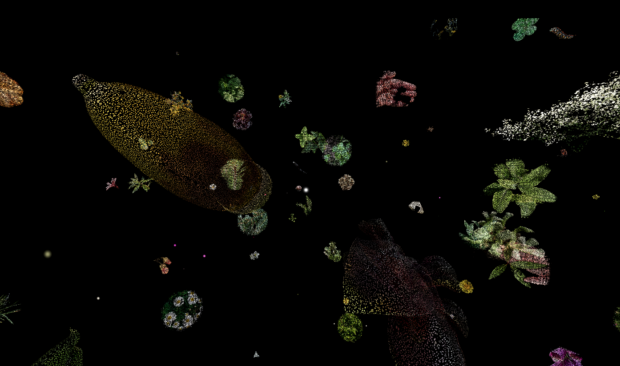


EAT.BITZ is a data-driven oracle experience for exploring biodiversity of the kitchen.
Through an ingredient oracle reading, a kaleidoscope viewer, and an interactive digital platform, visitors get an intimate view of the ecological multitudes behind various dishes served in the restaurant.
EAT.BITZ uses data collected by the BITZ (Biodiversity in Transition Zones) digital tool—a participatory platform for place-based species quests that explore and document biodiversity in various landscapes.
For EAT.BITZ: Venn Canteen, BITZ data was collected from local regenerative farms and foragers who supply the restaurant. This data, including images and species names of both the cultivated ingredients and the surrounding wild biodiversity was translated into an interactive datascape and set of bespoke oracle cards that illustrate the biodiversity behind Venn Canteen’s menu and mission. Through EAT.BITZ: Venn Canteen, visitors to the restaurant can learn about key ingredients and feel connected to the wild species that support the agroecological systems of Northern Portugal.
CREDITS
The BITZ team is composed of:
Bernat Cuni: Bernat Cuní is an artist and digital craftsman working with emerging technologies from a post-capitalist lens.
Ruben Gres is a machine learning engineer turned creative technologist. He specializes in generative AI and interactive systems with a focus on bringing high level concepts to everyone through playful experiences.
Genomic Gastronomy is an artist-led think tank that examines the biotechnologies and biodiversity of human food systems. Their mission is to map food controversies, prototype alternative culinary futures, and imagine a more just, biodiverse & beautiful food system.
EAT.BITZ: Venn was created in partnership with Venn Canteen in Porto, Portugal and supported by ST3ER (2025-2026).
VENN is a 100% plant-based restaurant in Porto’s Baixa district. Founded in 2023 by Monika Bloch, Snider Rodrigues, and Julian Fernandes, VENN celebrates the full potential of vegetables through explorative cuisine rooted in regenerative agriculture, agroforestry, and the revitalisation of ancient and overlooked ingredients. The restaurant works closely with small-scale regenerative farms and foragers across Portugal, and uses its tasting menu format to make biodiversity, sourcing, and circularity legible to guests.
This project was supported by ST3ER: Scaling Twin Transition in Tourism by harnessing the Experience Economy for greater Resilience.